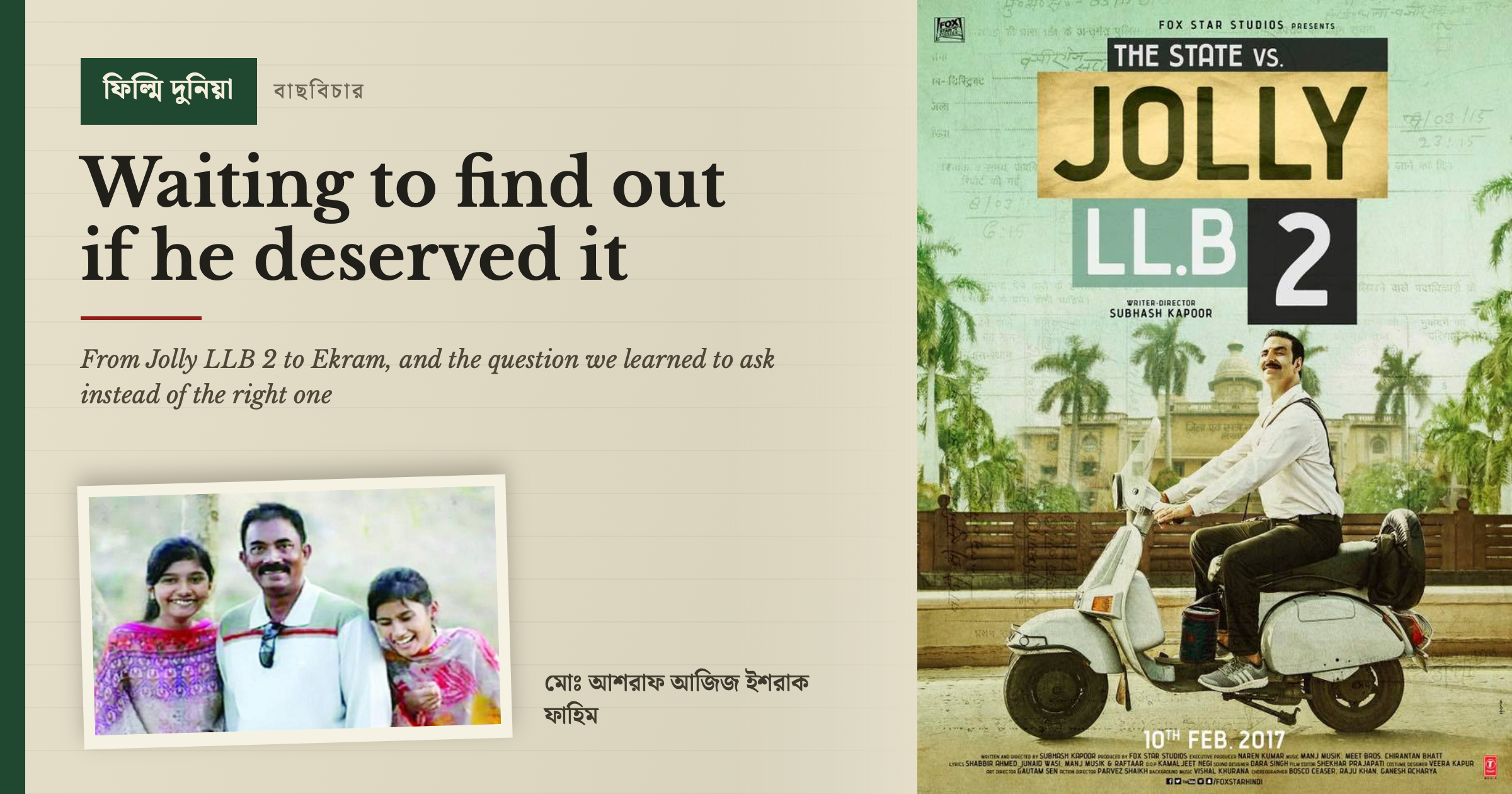
Waiting to find out if he deserved it
From Jolly LLB 2 to Ekram, and the question we learned to ask instead of the right one
…
I wrote this as coursework when I was studying International Relations at Bangladesh University of Professionals. My teacher discarded it, on the ground that Jolly LLB 2 was not a prestigious enough film to write about. What mattered to him was not the social text but the perceived prestige of that social text.
I think the significance of this film lies precisely in its banality. It is one of those films so commonsensical and so mundane that it never stands out in history, and for that very reason captures the average moment of history perfectly.
For some years now, Bollywood has produced films such as Shootout at Lokhandwala, D-Day and Naam Shabana, which imply that in a country like India, where the courts cannot deliver justice owing to corruption, procedural complexity, interminable delay and the abuse of power by elites and the executive alike, quick justice by extrajudicial means is acceptable and even desirable. Jolly LLB 2, the 2017 film written and directed by Subhash Kapoor, is a film of the same kind, though a far less explicit one. That is precisely why it deserves attention. It is easy enough to tell good from evil, but it is not easy to unmask an evil that presents itself as good.
Killing the bad guy is right, the good guy wrong
Jagdishwar “Jolly” Mishra, the central character of Jolly LLB 2, played by Akshay Kumar, who has lately built a reputation for acting in pro-Hindutva films with a social message, is a Lucknow lawyer who takes up the case of Iqbal Qasim, an ordinary Muslim man killed in a staged encounter the day after his wedding. The officer responsible had taken a bribe from Iqbal Qadri, described in the film as a Kashmiri terrorist, and killed Qasim in his place. Despite the obstacles put up by the officer, his lawyer and other figures within the state machinery, Jolly establishes before the court how the fake gunfight was carried out. The court hands the officer a life sentence, declares Qasim innocent and orders Qadri’s arrest.
The film’s description of Kashmiris fighting for independence as terrorists is, of course, only one side of a contested story, and it happens to be the side the Indian state tells.
At first glance, this may look like an innocent film about a lawyer’s struggle to win a man the justice he deserves. However, inspected closely, the notion it promotes is dangerous: it is acceptable to kill a terrorist, or a criminal in general, outside the jurisdiction of the judiciary.
The film did generate controversy, partly for its portrayal of the dismal state of the Indian judiciary and partly for its treatment of Kashmir. Significantly less attention has been paid to the fact that this film normalises extrajudicial killing in a sophisticated manner.
At the heart of my argument is the scene showing the arrival in Lucknow of two CBI officers to investigate Qasmi’s death, and from their conversation it can be inferred that they would not have objected had Qasmi actually been the terrorist they took him for.
The film sustains this feeling throughout. The extrajudicial killing of a criminal is justified, and the killing is questioned only because the victim happens to have been innocent. What the film settles into the mind of its audience is that killing a so-called terrorist without trial is entirely acceptable, whether the reason offered is the complexity of the judicial system or anything else.
“Justice” by extrajudicial means
Jolly LLB 2 is not an isolated case of extrajudicial killing being championed in the name of justice. In third world countries plagued by corruption, red tape, trials so long they may never conclude within a lifetime, and the routine misuse of power, such methods have become popular. Whether a settlement reached outside the jurisdiction of the court can be called justice at all is a serious normative question.
The first problem with such settlements is that they ignore the fact that only the court has the right to decide who is in the wrong. Even where a person is found to be in the wrong, the question of the degree of their crime remains. Measuring the degree of the offence is essential, because the punishment follows from it. To measure the degree, we must hear both sides, and the accused must be able to defend himself, which is to say he must have the right to a fair trial. That is exactly what extrajudicial settlement denies him.
In the wake of the “social awareness” produced by film industries like Hollywood and Bollywood, people often come to think that taking matters into their own hands is a moral obligation. They do not merely approve of extrajudicial means; they consider them morally right. What they forget is that when states fail to settle disputes among citizens, the very idea of the state is challenged.
Symptom of a failed state?
A state’s most basic duties are to protect its citizens, to give justice to the wronged and to bring wrongdoers to trial. In an era when extrajudicial means of securing justice are being championed, the question of whether the states in which they have won tacit or explicit approval are failed states looms large.
There may be disagreement about which comes first, the state’s failure to do its job or the turn to “justice” by extrajudicial means. There should be no doubt that wherever people resort to extrajudicial measures to secure what they perceive as justice, the state has failed, at least in part, to do what it ought to do.
The reflection in Bangladeshi society
Like most Indian films, Jolly LLB 2 found a large audience in Bangladesh. The ever-growing urban middle-class youth make up the bulk of the audience that finds films with a social message interesting. While we will never be able to tell if the film was influencing Bangladeshi society or reflecting the attitude of a significant chunk of Bangladeshi population, what we can tell is that we saw a deeply flawed debate in the Bangladeshi public sphere.
The attitude the film displays, that killing the bad guy is right and killing the good guy wrong, was on full show in Bangladesh after Ekram, a politician and alleged drug dealer from Cox’s Bazar, was killed in a “gunfight”.
An audio clip released by his family convinced social media users that the gunfight had been staged. Even so, they could not decide whether to protest. Their hesitation had nothing to do with any doubt about the authenticity of the clip or the fact that Ekram had indeed been deliberately killed by state forces. They were waiting for evidence that Ekram belonged to the good guys, as though his being guilty would have made him a legitimate target for killing outside the law.
When it emerged that he had drug-related cases filed against him, a great many people on social media came out in support of the killing. They no longer recognise that extrajudicial killing is to be resented whatever the circumstances. All they now care about is whether the dead man was the bad guy. Jolly LLB 2 has succeeded in not only capturing but also endorsing that flawed notion of justice.
…
সে এইটা ডিজার্ভ করছিল কিনা, সেইটা জানার অপেক্ষায়
জলি এলএলবি ২ থিকা একরাম পর্যন্ত, আর সঠিক প্রশ্নের বদলে আমরা যেই প্রশ্নটা করতে শিখছি
মোঃ আশরাফ আজিজ ইশরাক ফাহিম
…
এইটা আমি লেখছিলাম কোর্সওয়ার্ক হিসাবে, যখন বাংলাদেশ ইউনিভার্সিটি অফ প্রফেশনালসে ইন্টারন্যাশনাল রিলেশনস পড়তেছিলাম। আমার কোর্স টিচার এইটা বাতিল কইরা দিছিলেন, এই যুক্তিতে যে, জলি এলএলবি ২ এমন কোন প্রেস্টিজিয়াস সিনেমা না যে এইটা নিয়া লেখা যায়। উনার কাছে সোশাল টেক্সটটা কোন বিবেচনার বিষয় ছিল না, বরং সেই সোশাল টেক্সটটার পারসিভড প্রেস্টিজ কতটুক – সেইটা নিয়া চিন্তায় ছিলেন।
আমার মনেহয়, এই সিনেমাটার সিগনিফিকেন্সটাই আসলে এর ব্যানালিটির মধ্যে। এইটা এমন একটা সিনেমা, এতোই কমনসেন্সিকাল আর মামুলি যে, ইতিহাসে এইটা কখনো আলাদা কইরা চোখে পড়ে না, আর ঠিক এই কারনেই এইটা ইতিহাসের গড়পড়তা মুহূর্তটারে খুবই ঠিকঠাক ধইরা ফেলে।
কয়েক বছর ধইরাই বলিউড এমন সব সিনেমা বানাইতেছে – যেমন শুটআউট অ্যাট লোখান্ডওয়ালা, ডি-ডে আর নাম শাবানা – যেইগুলা এইরকম একটা ধারনা দেয় যে, ইনডিয়ার মতো একটা দেশে, যেইখানে দুর্নীতি, প্রসিডিউরাল জটিলতা, শেষ না হওয়া ডিলেনেস আর এলিট ও এক্সিকিউটিভদের ক্ষমতার অপব্যবহারের কারনে কোর্ট জাস্টিস দিতে পারে না, সেইখানে এক্সট্রাজুডিশিয়াল উপায়ে দ্রুত বিচার করাটা মানা যায়, এমনকি এক্সপেক্টেডও। জলি এলএলবি ২, ২০১৭ সালের সিনেমা, লেখছেন আর ডিরেক্ট করছেন সুভাষ কাপুর, এইটাও একই ধরনের সিনেমা, যদিও অনেক কম এক্সপ্লিসিট ভাবে। ঠিক এই কারনেই এইটা মনোযোগ পাওয়ার যোগ্য। ভালো-মন্দ আলাদা করাটা সহজই, কিনতু যেই খারাপটা নিজেরে ভালো হিসাবে হাজির করে, সেইটার মুখোশ খোলাটা সহজ না।
খারাপ লোকটারে মারাটা ঠিক, ভালো লোকটারে মারা ভুল
জলি এলএলবি ২-এর সেন্ট্রাল ক্যারেক্টার জগদীশ্বর “জলি” মিশ্র, প্লে করছেন অক্ষয় কুমার, যিনি রিসেন্ট টাইমে প্রো-হিন্দুত্ব, সোশাল-মেসেজ-ওয়ালা সিনেমায় অভিনয় করার জন্য একটা রেপুটেশন বানাইছেন। উনি লখনৌ’র একজন উকিল, যে ইকবাল কাসিমের কেসটা হাতে নেয় – একজন সাধারন মুসলিম লোক, বিয়ার পরের দিনই যারে একটা সাজানো এনকাউন্টারে মাইরা ফেলা হইছিল। যেই অফিসার দায়ি, সে ইকবাল কাদরি নামের একজনের কাছ থিকা ঘুষ নিছিল – সিনেমায় যারে কাশ্মিরি সন্ত্রাসী হিসাবে দেখানো হইছে – আর তার জায়গায় কাসিমরে মাইরা ফেলছিল। অফিসার, তার উকিল আর রাষ্ট্রযন্ত্রের ভিতরের আরো লোকজনের বাধা সত্ত্বেও, জলি কোর্টে প্রমান কইরা দেখায় যে, ভুয়া গানফাইটটা কিভাবে ঘটানো হইছিল। কোর্ট অফিসাররে যাবজ্জীবন সাজা দেয়, কাসিমরে নির্দোষ ঘোষনা করে, আর কাদরিরে গ্রেপ্তারের নির্দেশ দেয়।
কাশ্মিরি স্বাধীনতাকামীদের সন্ত্রাসী হিসাবে সিনেমাটা যেভাবে দেখাইছে, সেইটা তো অবশ্যই একটা কনটেস্টেড গল্পের এক পক্ষ মাত্র, আর এইটা হইতেছে সেই পক্ষ যেইটা ইনডিয়া রাষ্ট্র বলে।
প্রথম দেখায় মনে হইতে পারে এইটা এক উকিলের ন্যায্য বিচার পাওয়ার লড়াইয়ের নিরীহ গল্প। কিনতু কাছ থিকা দেখলে বুঝা যায়, এইটা যেই ধারনাটা প্রমোট করে সেইটা বিপজ্জনক – যে, বিচার বিভাগের এখতিয়ারের বাইরে গিয়া একজন সন্ত্রাসীরে, বা সাধারনভাবে একজন ক্রিমিনালরে মাইরা ফেলাটা মানা যায়।
সিনেমাটা কন্ট্রোভার্সি তৈরি করছিল, একটা কারন ছিল ইনডিয়ান জুডিশিয়ারির খারাপ অবস্থা দেখানোর জন্য, আরেকটা কারন ছিল কাশ্মির নিয়া এর ট্রিটমেন্ট-এর জন্য। কিনতু এই সিনেমাটা যে এতো সফিস্টিকেটেড ভাবে এক্সট্রাজুডিশিয়াল কিলিংরে নরমালাইজ কইরা দিতেছে, সেইদিকে অনেক কম নজর দেয়া হইছে।
আমার আর্গুমেন্টের কেন্দ্রে আছে সেই সিনটা, যেইখানে দুইজন সিবিআই অফিসার কাসিমির মৃত্যুর তদন্তে লখনৌ আসেন, আর উনাদের কথাবার্তা থিকা বুঝা যায় যে, কাসিমি যদি আসলেই সেই সন্ত্রাসী হইতো যারে উনারা ভাবছিলেন, তাইলে উনাদের কোন আপত্তিই থাকতো না।
সিনেমাটা পুরাটা জুড়েই এই ফিলিংটা ধইরা রাখে। একজন ক্রিমিনালরে এক্সট্রাজুডিশিয়াল ভাবে মাইরা ফেলাটা জাস্টিফাইড, আর এই হত্যাকান্ড নিয়া প্রশ্ন ওঠে খালি এই কারনে যে, ভিকটিম আসলে নির্দোষ ছিল। এই সিনেমা দর্শকের মাথায় যেই জিনিসটা বসাইয়া দেয় সেইটা হইতেছে – বিচার ছাড়া একজন কথিত সন্ত্রাসীরে মাইরা ফেলাটা পুরাপুরি মেনে নেয়া যায়, কারনটা জুডিশিয়াল সিস্টেমের জটিলতা হোক বা অন্য যেকোন কিছুই হোক না কেন।
এক্সট্রাজুডিশিয়াল “জাস্টিস”
জলি এলএলবি ২ একমাত্র উদাহরন না যেইখানে জাস্টিসের নামে এক্সট্রাজুডিশিয়াল কিলিংরে সেলিব্রেট করা হইছে। দুর্নীতি, লাল ফিতা, এমন লম্বা বিচার যা হয়তো জীবদ্দশায় শেষই হবে না, আর ক্ষমতার নিয়মিত অপব্যবহারে ভোগা থার্ড ওয়ার্ল্ড দেশগুলাতে এইরকম পদ্ধতি জনপ্রিয় হয়া উঠছে। কোর্টের এখতিয়ারের বাইরে যেই সেটেলমেন্ট, সেইটারে আসলেই জাস্টিস বলা যায় কিনা – এইটা একটা সিরিয়াস নর্মেটিভ প্রশ্ন।
এইরকম সেটেলমেন্টের প্রথম সমস্যা হইতেছে, এইগুলা এই ফ্যাক্টটা ইগনোর করে যে, কে ভুল সেইটা ঠিক করার অধিকার একমাত্র কোর্টের-ই। এমনকি কেউ ভুল প্রমানিত হইলেও, তার অপরাধের মাত্রাটা কি – এই প্রশ্ন থাইকা যায়। অপরাধের মাত্রা মাপাটা জরুরি, কারন শাস্তি তো এইটার উপরেই নির্ভর করে। মাত্রাটা মাপতে হইলে দুইপক্ষের কথাই শুনতে হবে, আর অভিযুক্তরে নিজেরে ডিফেন্ড করার সুযোগ দিতে হবে, মানে তার একটা ফেয়ার ট্রায়ালের অধিকার থাকতে হবে। এক্সট্রাজুডিশিয়াল সেটেলমেন্ট ঠিক এইটাই তার থিকা কাইড়া নেয়।
হলিউড আর বলিউডের মতো ফিল্ম ইন্ডাস্ট্রিগুলা যেই “সোশাল অ্যাওয়ারনেস” তৈরি করছে, তার প্রভাবে অনেকেই মনে করা শুরু করছেন যে, নিজের হাতে আইন তুইলা নেয়াটা একটা মোরাল অবলিগেশন। উনারা খালি এক্সট্রাজুডিশিয়াল উপায়রে এপ্রুভ-ই করেন না, বরং এইটারে মোরালি ঠিকও মনে করেন। উনারা এইটা ভুইলা যান যে, স্টেট যখন সিটিজেনদের মধ্যকার বিরোধ মিটাইতে ব্যর্থ হয়, তখন স্টেটের আইডিয়াটাই চ্যালেঞ্জড হয়া যায়।
ফেইল্ড স্টেটের লক্ষন?
একটা রাষ্ট্রের সবচেয়ে বেসিক দায়িত্ব হইতেছে তার সিটিজেনদের প্রোটেক্ট করা, যারা ভুক্তভোগী তাদের জাস্টিস দেয়া, আর অপরাধীদের বিচারের মুখোমুখি করা। যেই যুগে এক্সট্রাজুডিশিয়াল উপায়ে জাস্টিস পাওয়াটা সেলিব্রেটেড হইতেছে, সেইখানে বড় প্রশ্ন হইয়া দাঁড়ায় – যেই রাষ্ট্রগুলাতে এইটা ট্যাসিট বা এক্সপ্লিসিট এপ্রুভাল পাইছে, সেইগুলা কি ফেইল্ড স্টেট?
কোনটা আগে – রাষ্ট্রের তার কাজ করতে ব্যর্থতা, নাকি এক্সট্রাজুডিশিয়াল “জাস্টিস”র দিকে ঝুঁকে যাওয়া – এই নিয়া ডিসএগ্রিমেন্ট থাকতে পারে। কিনতু এইটাতে কোন সন্দেহ থাকার কথা না যে, যেখানেই মানুশ যা তারা জাস্টিস মনে করে সেইটা পাওয়ার জন্য এক্সট্রাজুডিশিয়াল উপায়ের দিকে যায়, সেখানে রাষ্ট্র – অন্তত আংশিকভাবে – যা তার করার কথা সেইটা করতে ব্যর্থ হইছে।
বাংলাদেশি সমাজে এর প্রতিফলন
বেশিরভাগ ভারতীয় সিনেমার মতোই, জলি এলএলবি ২ বাংলাদেশেও বিশাল দর্শক পাইছিল। যেই আরবান মিডল-ক্লাস তরুন জনগোষ্ঠি ক্রমাগত বড় হইতেছে, সোশাল মেসেজওয়ালা সিনেমা তাদের কাছেই সবচেয়ে বেশি আগ্রহের বিষয়। আমরা কখনোই ঠিকমতো বলতে পারবো না যে, এই সিনেমাটা বাংলাদেশি সমাজরে ইনফ্লুয়েন্স করতেছিল নাকি বাংলাদেশের একটা বড় অংশের মনোভাবরেই রিফ্লেক্ট করতেছিল, কিনতু এইটা বলতে পারি যে, আমরা বাংলাদেশের পাবলিক স্ফিয়ারে একটা গভীরভাবে ফ্লড ডিবেট দেখছি।
সিনেমাটা যেই এটিটিউড দেখায় – খারাপ লোকটারে মারাটা ঠিক আর ভালো লোকটারে মারাটা ভুল – সেইটা পুরাপুরি দেখা গেছিল বাংলাদেশে, যখন কক্সবাজারের রাজনীতিবিদ ও অভিযুক্ত মাদক ব্যবসায়ি একরামরে একটা “গানফাইটে” মাইরা ফেলা হয়।
তার পরিবারের রিলিজ করা একটা অডিও ক্লিপ সোশাল মিডিয়া ইউজারদের কনভিন্স কইরা ফেলছিল যে, গানফাইটটা সাজানো ছিল। এরপরেও, উনারা ঠিক করতে পারতেছিলেন না, প্রতিবাদ করবেন কিনা। উনাদের এই দ্বিধাটার সাথে ক্লিপটার অথেনটিসিটি নিয়া কোন সন্দেহের সম্পর্ক ছিল না, বা একরামরে যে সত্যিই স্টেট ফোর্স ইচ্ছাকৃতভাবে মাইরা ফেলছে – সেইটা নিয়াও না। উনারা অপেক্ষা করতেছিলেন এমন প্রমানের জন্য যে, একরাম ভালো লোকদের দলে ছিল – যেন সে দোষী হইলে সেইটাই তারে আইনের বাইরে গিয়া মারার একটা লেজিটিমেট টার্গেট বানায়া দিতো।
যখন জানা গেলো তার নামে মাদক সংক্রান্ত মামলা আছে, তখন সোশাল মিডিয়ায় প্রচুর লোকজন সেই কিলিংয়ের পক্ষে আওয়াজ তুইলা ফেললেন। উনারা আর রিকগনাইজ করেন না যে, এক্সট্রাজুডিশিয়াল কিলিং যেকোন পরিস্থিতিতেই নিন্দনীয়। উনাদের এখন খালি একটাই চিন্তা – মরা লোকটা খারাপ লোক ছিল কিনা। জলি এলএলবি ২ খালি এই ফ্লড জাস্টিসের ধারনাটা ধইরাই ফেলে নাই, বরং এইটারে এনডোর্সও কইরা ফেলছে।

মোহাম্মদ ইশরাক
Latest posts by মোহাম্মদ ইশরাক (see all)
- Waiting to find out if he deserved it - August 22, 2026
- Banalizing Islam - July 4, 2026
- এসেনশিয়ালিস্ট রাষ্ট্রকল্পে খেলাফত ও ইসলামপন্থা বনাম ঐতিহাসিক কন্টিঞ্জেন্সি - September 22, 2025